
Determining the best way to use hemp extract often results in the debate on whether to use CBD gummies or tinctures. However, as the hemp world expands, so does the number of people engaged in the debate on whether to use liquid hemp extract or hemp gummies.
The differences between gummies and tinctures of CBD-that is, onset time, bioavailability, and dosing-necessitates that you find a product that matches or fits well into your lifestyle and health objectives. Whether you want fast relief or a slow-release effect, the delivery method significantly commands your overall experience.
CBD Gummies vs Tinctures: What Should You Know Before Choosing?
CBD gummies vs tinctures is a comparison that beginners who are new to Aarogya CBD need to consider. Gummies are usually chewable, tasty, and easy to administer. Gummies are taken under the tongue as opposed to being eaten and processed through the digestive system, which leads to a slower onset time with a longer-acting effect.
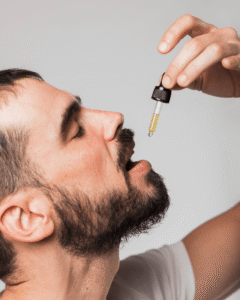
CBD tinctures are typically CBD extracts in liquid form. These CBD tinctures usually contain a carrier oil such as MCT or hemp seed oil. CBD tinctures are taken sublingually. This way, they get absorbed into the bloodstream faster and tend to take effect more rapidly. CBD tinctures are chosen when the individual seeks faster results and more precise dosages. The choice of CBD tinctures vs. CBD gummies depends on what you prefer.
Are CBD gummies vs tinctures better for different consumption styles?
Your decision to use CBD gummies rather than tinctures, for example, may depend on your daily habits and comfort level with certain products. Some people see their health routine as a ceremony, taking the time to use the exact dosage of oil. Others prefer the “set it and forget it” approach and decide to tie a gummy to a fussy commute or a gym visit.
The form you prefer determines the method by which you’ll actually ingest it. Swallowing a sublingual will involve holding liquid under your tongue for 60 seconds, which may not be comfortable for everyone, while chewing a gummy is a very comfortable and familiar motion that doesn’t require a special skillset at all. Your need for routine and comfort will probably be your biggest influencer from a self-interest standpoint.
Are edibles vs liquid extracts more effective?
The term “effective” is subjective in the world of cannabinoids. If effectiveness means how much of the compound actually reaches your system, liquid extracts usually win. However, if effectiveness means how long the relief stays with you, edibles often take the lead due to their slow-release nature.
Digestion plays a massive role here. When you swallow a gummy, your liver breaks down a portion of the CBD before it hits your blood. A tincture, via direct absorption, avoids this initial breakdown, making it feel more “potent” in the short term.
Is sublingual vs oral consumption absorbed differently?
Yes, the absorption pathways are entirely distinct. Sublingual consumption involves placing drops under the tongue to hit the sublingual gland. This allows the CBD to enter the bloodstream almost immediately, skipping the long journey through the gut.
Oral consumption, like eating a gummy, means the CBD must survive the harsh environment of the stomach and the “first-pass” metabolism of the liver. This leads to different user expectations regarding how soon they will feel the effects after consumption.
Do cannabinoid delivery methods change results?
The delivery method acts as the vehicle for the cannabinoid. Just as a sports car and a tractor get you to the same destination at different speeds, tinctures and gummies provide the same CBD but with different experience profiles.
A fast delivery method is better for acute situations, while a slower delivery method provides a steady baseline. Connecting these methods to your specific wellness goals is essential for getting the results you desire from your hemp products.
Is CBD oil vs CBD tincture the same thing?
Many people use these terms interchangeably, but they have traditional differences. CBD oil typically uses a fatty base like MCT oil to dissolve the extract. Historically, a tincture used an alcohol base to pull the compounds from the plant.
In the modern market, including the range at Aarogya CBD, most products labelled as tinctures are actually oil-based because they taste better and are easier on the digestive tract. Understanding this helps you avoid buying mistakes when browsing online.
What is the difference between hemp oil and CBD tincture?
This is a crucial distinction for any shopper. Hemp seed oil is made by cold-pressing seeds and contains zero CBD or THC. It is great for cooking but won’t provide cannabinoid benefits. A CBD tincture uses the flowers and leaves of the plant to extract the active compounds.
Always check the label to ensure you aren’t buying a “hemp oil” product that lacks active cannabinoids. Buying from transparent brands ensures you get the potency you are paying for without the confusion.
How does CBD gummies vs tinctures absorption work in the body?
To master CBD gummies vs tinctures (onset time, bioavailability & dosing), you must understand the science of bioavailability. This term refers to the percentage of CBD that actually enters your circulation to produce an effect. Because the body is mostly water and CBD is fat-soluble, the delivery format determines how much is wasted and how much is used.
The body processes these two formats through different biological “roads.” One is a highway (tinctures), and the other is a scenic route with several stops (gummies). Setting realistic expectations about these pathways prevents frustration when waiting for the CBD to take effect in your system.
Is bioavailability higher with tinctures than gummies?
In simple terms, tinctures generally offer higher bioavailability. Research suggests that sublingual absorption allows for roughly 13% to 35% of the CBD to reach the blood. Because it avoids the gut, more of the compound remains intact.
Gummies usually have a bioavailability of around 4% to 20%. While this seems lower, the variability by person is high. Factors like what you ate for lunch can actually help gummy absorption, as fats help the body take in cannabinoids.
Is onset time faster with tinctures than gummies?
If you are looking for fast-acting relief, tinctures are the superior choice. You can typically expect to feel the effects of a tincture within 15 to 45 minutes. The direct entry into the blood vessels under the tongue makes this speed possible.
Gummies, on the other hand, take much longer. Because gummies have to be digested, this can take anywhere between 60 and 90 minutes. However, this type of delayed satisfaction is considered a trade-off of the convenience provided by the consumption of edibles.
Does duration of effects differ between formats?
Where tinctures get you started immediately, the opposite can be said for the gummies; they tend to last longer. This breakdown in the digestive tract gives you the CBD gradually, pooling in your system for a good while. It gives you relief for 6 to 8 hours.
Tinctures tend to peak quickly and fade faster, usually lasting about 4 to 6 hours. This makes gummies a popular choice for people who want a consistent level of CBD throughout their entire workday or through the night.
Is absorption rate different in digestive tract vs sublingual blood vessels?
The pathway differences are the reason for the speed gap. Sublingual blood vessels provide a shortcut to the systemic circulation. The digestive tract is a complex system involving acids and enzymes that slow down the absorption rate considerably.
By choosing the sublingual route, you are choosing efficiency. By choosing the digestive route, you are choosing a time-release mechanism that the body manages naturally through the gut.
Does metabolic breakdown in the liver reduce gummy potency?
This phenomenon is known as first-pass metabolism. When you ingest CBD, the liver filters the blood coming from the digestive tract, which can neutralise a large portion of the CBD before it ever reaches your brain or receptors.
This can leave the potency of the CBD less than it really is. But modern CBD products have emulsifiers to ensure that the CBD does not degrade during the process, thus providing you with a strong dose from your chosen Aarogya CBD gummies.
How long do CBD gummies take to kick in compared to tinctures?
To summarize the timing, tinctures take about 20 minutes on average, while gummies take over an hour. Influencing factors include your metabolism, body weight, and whether you have a full or empty stomach.
Always give your body enough time to process the first dose before taking more. Setting realistic expectations prevents “stacking” doses, which can lead to unnecessary drowsiness later in the day.
Is dosing control easier with tinctures or gummies?
In the debate about CBD gummies vs tinctures, dosing control often determines their choice. But since CBD works differently on different people, it would be best if you knew exactly how much milligrams of CBD you took. CBD tinctures, being the liquid form of CBD, have a graduated dropper, which allows users to take precise amounts, say, 0.25ml, 0.5ml, where a user can adjust the amount of CBD taken in suitable steps.
CBD gummies are convenient-sized serving sizes, such as 25 milligrams per serving, which helps eliminate guesswork as well as saves time. Gummies are, therefore, best suited to those who prefer a hassle-free, no-mess option.
Tinctures are actually much easier to mic dose with, as you literally pop a few drops as many times a day as you like. If you are particularly sensitive or want to step up a dose, tinctures are more precise, while gummies are more about ease of use.
Are CBD gummies vs tinctures more convenient for daily life?
When we talk about lifestyle factors, convenience usually wins. A product is only good if you actually remember to take it. Your daily routine and how “public” you are with your supplement use will influence your choice.
Portability and discreteness are the hallmarks of a good CBD product. While both formats are relatively easy to manage, one is definitely more “socially invisible” than the other in a professional or public setting.
Is discreet consumption easier with pop-and-go or under-the-tongue use?
Eating a gummy is the definition of discreet consumption. No one will look twice at someone eating a piece of candy. It is a “pop-and-go” method that takes three seconds and leaves no trace.
Using a tincture requires a bit more effort. You have to open a bottle, use a dropper, and hold the liquid under your tongue for a minute. This visibility in public might make some users feel self-conscious, especially in an office or a gym.
Is portability important for travel-friendly CBD?
For those who travel frequently, portability is a high priority. Gummies are the clear winner here; they won’t leak in your bag and are easy to pack in a carry-on. There is no risk of a spill ruining your clothes.
Tinctures come in glass bottles which can break or leak if the cap isn’t perfectly tight. While they are still travel-friendly, they require a bit more care and perhaps a Ziploc bag for extra security during flights.
Is ease of use higher with hassle-free options?
For beginners, the learning curve of a tincture measuring the liquid, holding it under the tongue can be a slight barrier. Gummies are a hassle-free option that encourages consistent habit formation because there are no steps involved.
If you want the most straightforward experience possible, choose the gummy. If you are willing to learn the sublingual technique for better results, the tincture is worth the extra effort.
Is calorie content lower in tinctures than gummies?
For diet-conscious users, tinctures are the better option. They usually contain only CBD extract and a carrier oil, resulting in negligible calories. Gummies contain sugar, corn syrup, or fruit juice, which adds up if you are taking several a day.
If you are strictly monitoring your sugar content, or if you follow a ketogenic diet, a tincture ensures you get your CBD without any unwanted additives or calories.
Do quality and formulation factors matter when choosing?
Regardless of the format, quality affects safety and your final results. You should never buy a product based on price alone. Understanding how the hemp was grown and how the CBD was extracted is the only way to be an informed buyer.
Always read the labels of your Aarogya CBD products. The difference between a premium extract and a cheap one is often found in the third-party lab reports and the specific type of extract used in the recipe.
Are CO₂ extraction methods better than alcohol-based extraction?
Most experts agree that CO₂ extraction is the gold standard. It uses pressurized carbon dioxide to remove the CBD from the plant. This method leaves behind no toxic residues. It is also an environmentally friendly procedure.
Alcohol extraction is another common technique that is safe if carried out properly. The perception of CO2 is generally that it is a cleaner method than alcohol extraction. Most premium brands prefer to use CO2.
Do carrier oils like MCT or hemp seed oil change effects?
Carrier oils are not just fillers; they aid in delivery. MCT oil (derived from coconut) is popular because the body can digest it very quickly, which helps the CBD get into your system faster.
Hemp seed oil is another great choice that adds extra omega fatty acids to the mix. These oils don’t change the “high” (since there isn’t one), but they do influence digestion and absorption efficiency.
Is the entourage effect important for results?
The entourage effect is the theory that CBD works better when combined with other hemp compounds like terpenes and minor cannabinoids. It creates a synergy that many users find more effective than CBD alone.
If you want to experience this, look for full or broad-spectrum products. While isolate is effective, it lacks the “teamwork” that makes the whole plant extract so popular in the wellness community.
Is third-party lab testing necessary for safety?
Yes, A COA (Certificate of Analysis) is the only way to prove what is inside the bottle. It confirms the potency and ensures the product is free from heavy metals, pesticides, and mold.
Transparency is a non-negotiable factor of a trustworthy brand. If a company doesn’t provide lab results, you should look elsewhere. Your safety and health deserve a verified product.
Are CBD gummies vs tinctures better for specific wellness goals?
While both can help you reach a state of homeostasis, the timing of the two formats makes them better suited for different wellness goals. Because everyone’s body chemistry is unique, personalization is the key to success.
Format choice affects timing, and timing is everything when you are trying to manage a specific need. Consider when you need the CBD to be at its strongest in your system before you make your final purchase.
Are wellness goals like sleep, anxiety, pain, or focus format-dependent?
If you are looking for help with focus during a 2 PM slump, a fast-acting tincture is ideal. If you are looking for all-day support for general discomfort, the long-lasting nature of gummies is often more beneficial.
By matching the onset and duration of the product to your specific goal, you can create a more effective routine. It’s about having the right tool for the specific job you want to do.
Which is better for sleep: CBD gummies or oil?
For sleep support, many users prefer gummies. Because they take an hour to kick in and last for 6-8 hours, they can help you stay asleep throughout the night. Taking one an hour before bed creates a perfect nighttime routine.
However, if you find it hard to fall asleep initially, an oil/tincture might be better because it works faster. Some people even use both to cover both ends of the sleep cycle.
Are gummies vs tinctures better for anxiety?
For situational anxiety, like before a public speech, a tincture is the clear winner due to its rapid delivery. You don’t want to wait 90 minutes for relief when you are feeling stressed now.
For general daily stress, a gummy taken in the morning can provide a steady delivery of CBD that keeps you grounded throughout the day. It prevents the “peaks and valleys” of stress from becoming overwhelming.
Is combining gummies and tinctures a smart synergistic combo?
Many experienced users find that a combination is the “best of both worlds.” You might take a tincture in the morning for a quick start and a gummy with lunch to carry you through the evening.
This timing strategy allows you to maintain a consistent level of CBD in your blood while having a “booster” available for high-stress moments. Always start with cautious testing when mixing formats.
Can CBD tincture be used topically?
While tinctures are designed for oral use, they can technically be used topically. If the tincture is made with a simple MCT oil base, it is generally skin-safe and can be rubbed into a specific area like a sore wrist or temple.
However, topicals like creams and balms are usually formulated with other ingredients like menthol or shea butter to help with skin penetration. A tincture won’t be as effective on the skin as a dedicated lotion, but it works in a pinch. Always check the product labels for any flavorings (like peppermint or citrus) that might irritate the skin before applying.
Frequently Asked Questions About CBD Gummies vs Tinctures
How long do CBD gummies take to kick in compared to tinctures?
CBD gummies usually take 60 to 90 minutes to work because your body digests them first. CBD tinctures act faster about 15 to 45 minutes since they absorb under the tongue directly into the bloodstream.
Which is better for sleep: CBD gummies or oil?
Your choice depends on your sleep goal. CBD gummies work better for staying asleep because they release CBD slowly over time. CBD oil helps you fall asleep faster due to quicker absorption. Many users combine both for full-night support.