
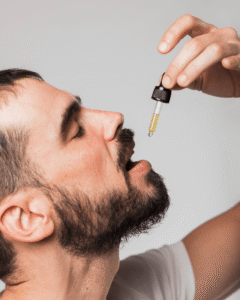
You’re dealing with anxiety. Someone mentions CBD. Someone else swears by THC. Both are from cannabis. Both claim to help. Now, which one to choose: CBD vs THC for anxiety?
This isn’t a simple answer because they are fundamentally different compounds that affect your body in very different ways. Understanding those differences helps you make an informed choice about what might work for you.
This guide breaks down how CBD vs THC anxiety actually works, what research shows, and why safety matters when you’re looking for relief.
CBD Vs THC For Anxiety
As the world is moving at pace, so are the mental issues associated with it. Today, anxiety is everywhere. Racing thoughts, drowsiness, chest tightness, trouble sleeping, constant worries – these issues impact millions of people.
Studies show that people with generalised anxiety disorder don’t even consult doctors. They would rather look for alternative ways to manage it. So, when people ask what’s better for anxiety CBD or THC, they’re usually asking: Which one will help me feel calmer without messing with my mind?
CBD and THC are both cannabinoids studied for anxiety, but evidence consistently differentiates them. Medical literature shows CBD is generally associated with anxiolytic effects, while THC demonstrates dose-dependent outcomes and may worsen anxiety at higher doses.
THC binds to the CB1 receptor. In simple language CB1 receptor is like a control switch and THC stimulates it while CBD does not numb the mind or change perception. Instead, it gently helps the brain return to balance, making anxious thoughts and physical stress responses easier to manage.
According to most journals, CBD is more tolerated compared to THC as setting dose in THC is of extreme importances. Moreover, CBD calms the nerves, returning it to balance, while THC directly interacts with the receptor, which can also backfire sometimes, as the interaction may vary from individual to individual.
Is CBD Or THC Better For Anxiety?
So, CBD or THC for anxiety…which one is better?
When people search for anxiety CBD or THC products do pop up. So, from the patient’s point of view, they are usually trying to understand which compound feels safer for the mind.
See, CBD and THC differ in anxiety-related effects. CBD is non-intoxicating and is consistently associated with calming responses in clinical studies.
THC, on the other hand, is mind-altering and depends on dose: low doses may reduce anxiety in some individuals, while higher doses often increase anxiety.
Now, usually, CBD products are preferred over THC because:
- It is safe
- It has calming effects
- It does not alter the mind.
THC works at low doses. According to a review published in Neuropsychopharmacology, THC can reduce anxiety at very low doses for some people, but higher doses can worsen the conditions. You can feel the side effects like increased anxiety, paranoia, and panic.
How Do CBD-Dominant And THC-Dominant Ratios Affect Anxiety?
When you see products labeled with ratios like “10:1 CBD to THC,” what does that actually mean?
See, ratios tell you the relationship between CBD and THC in the product. A 10:1 ratio means 10 parts CBD for every 1 part THC.
Pure THC products are riskier for anxiety. Pure CBD products are safer but might miss the “entourage effect”…the idea that cannabinoids work better together than alone.
What Is The Best THC To CBD Ratio For Anxiety?
There’s no universal “best” ratio, but clinical and observational data point toward CBD-heavy formulations.
So, some of the commonly preferred ratios are:
- 10:1 CBD to THC – 10 parts of CBD and 1 part of THC.
- 20:1 CBD to THC – 20 parts of CBD with 1 part THC.
- CBD-only (0% THC) – No THC, only CBD formulation.
Most people prefer CBD -Heavy ratios because CBD has a better ability to treat anxiety as compared to THC. As discussed above, THC may have a negative impact on patients. So, the CBD ratio may counteract some of THC’s anxiety-provoking effects.
Can THC Increase Anxiety Or Make It Worse?
Yes, THC can worsen your anxiety. According to research from Washington’s Alcohol & Drug Abuse Institute, anxiety and panic reactions are among the most commonly reported negative effects of marijuana intoxication. But why does that happen?
THC’s impact on anxiety follows what researchers call a “biphasic” pattern – meaning it has opposite effects at different doses. A study found that lower doses of THC (around 7.5 mg) helped reduce negative emotional responses to stress. However, when the dosage was higher (12.5 mg), it worked the opposite. It actually increased anxiety, negative mood, and subjective distress in participants.
So, who is at risk? The following people must avoid THC:
- Infrequent users who haven’t developed tolerance
- Women, who appear more susceptible to anxiety reactions
- People with existing anxiety disorders or symptoms
- Those using high-THC, low-CBD products
- Individuals with a history of previous anxiety reactions to cannabis
But again, these are all studies and not established truths. This usually depends on an individual’s tolerance, sensitivity, and the dosage of the drug taken. Previous experience with cannabis, brain chemistry, and mental health situations also matters a lot.
Is CBD Safe And Suitable For Anxiety?
When anxiety is the concern, safety matters more than speed or intensity. This is where CBD is usually discussed differently from THC.
CBD drugs are generally considered safe for anxiety management. It is considered non-intoxicating, which means it does not create a “high” or alter perception.
The thing about CBD is that it either works well (which is in most of the cases) or it doesn’t show any effect. In no case have any hardly negative effects been accounted for so far. Moreover, unlike THC, CBD doesn’t produce anxiety at higher doses. In fact, it acts as a regulatory buffer for emotional responses. That difference alone makes CBD feel more predictable for many people who already struggle with anxiety.
CBD also does not impair day-to-day functioning. People often report feeling calmer or more balanced rather than sedated or mentally foggy. It comes in healthy forms like CBD oil, gummies, balm, cream, and more.
It’s important to remember that CBD is not a medical cure, and results vary from person to person. However, when comparing CBD vs THC for anxiety, CBD is generally viewed as the safer and more stable option.
Is CBD Better For Brain Health Than THC?
Now the real question arises: what’s better for anxiety CBD or THC? Both affect the endocannabinoid system, but their cognitive and neurological effects are not the same. So, first, we will dive into how they affect an individual.
According to a study by Bhattacharyya, S and others, THC has some side effects. It makes people feel they are high, confused or forgetful, and at higher doses, it may have an adverse effect and can cause anxiety. On the other hand, CBD works differently. It does not disrupt brain function but rather may reduce some of the negative effects caused by THC.
Brain health matters in anxiety treatment. Anything that worsens focus, memory, or emotional regulation over time can make symptoms harder to manage.
Therefore, in the long run of CBD vs THC for anxiety, CBD may win due to lesser side effects, subject to the individual tolerance, doctor’s prescription, and symptoms.
How Do CBD And THC Affect Mood And Depression?
First, we need to understand how mood, anxiety, and depression overlap and operate. Think of it as an alarm system in the body that alerts the body for possible flight, fright, and fight. The problem starts when the alarm becomes too sensitive.
For some people, this alarm (anxiety) gets extra-sensitive and remains on for a longer time, as if there is no snooze button. That constant “on” state slowly affects mood. This is where anxiety and depression start blending into each other. One feeds the other.
Now, cannabinoids like CBD and THC interact with this system. They don’t treat your anxiety and switch it off. Instead, they help to regulate it depending on the situation.
Here’s how they affect mood and depression:
- CBD interacts with receptors linked to serotonin and stress regulation. It does not force a mood change. Instead, it supports emotional balance and helps the nervous system calm down gradually.
- THC directly affects mood perception. It creates feelings of euphoria, relaxation, and calm.
In short, CBD supports emotional regulation. Whereas THC amplifies emotional experience.
Can CBD Or THC Make You Feel High Or Stoned?
Let’s keep it simple.
- THC is psychoactive – It binds strongly to CB1 receptors in the brain. That’s what creates the “high,” altered perception, time distortion, and euphoria.
- CBD is non-intoxicating – It does not activate CB1 receptors. So, you stay mentally clear, present, and functional.
Why does this matter for anxiety? Because anxiety already messes with perception.
When THC alters thoughts and sensations:
- Heart rate feels louder
- Thoughts feel faster
- Body sensations feel exaggerated
For some people, that’s relaxing. But for many anxiety-prone users, it’s unsettling.
CBD works differently:
- No mental fog
- No loss of control
- No fear of “getting too high”
That’s why people who want calm without mental alteration usually lean toward CBD rather than THC.
Is THC Or CBD More Addictive?
Well, with all the possible positive effects, there can be some downsides. Dependence is one of them.
According to the WHO’s review report, CBD shows no addictive potential. Unlike THC, CBD doesn’t activate the brain’s reward pathways. So, it’s quite a safe option for people seeking some help with depression or anxiety relief.
However, dealing with THC is a little tricky, as there have been concerns of psychological dependence.
What THC does is create a reward system in the brain every time someone consumes it.
This happens because CB1 receptors in the brain become downregulated – meaning the brain produces fewer receptors in response to constant THC exposure.
When tolerance develops:
- Users need increasingly higher doses to achieve the same effects
- The body’s natural stress-regulation systems become dependent on external THC
- Stopping use can trigger withdrawal symptoms
In short, CBD has no addiction risk. But THC carries a risk of psychological dependence and mild physical dependence, but not to the extent of opioids or alcohol.
Is Cannabis An Effective Remedy For Anxiety Overall?
Here’s the thing: Cannabis isn’t one thing. It’s a plant with hundreds of compounds.
CBD and THC are not the same. Treating them as interchangeable is a mistake.
When people say “cannabis for anxiety,” that’s too vague. The research clearly differentiates:
- Pure CBD: Shows promise for anxiety with minimal risk
- High-THC cannabis: Often worsens anxiety, especially with regular use
- Balanced CBD/THC: Less studied, but appears safer than high-THC for anxiety-prone people
Note: Cannabis must NOT be consumed for generalised use.
What Does Scientific Research Say About CBD Vs THC For Anxiety?
There are many positive studies on CBD for anxiety. A 2019 study in The Permanente Journal followed 72 adults with anxiety and sleep issues. After one month of CBD use:
- 79.2% reported decreased anxiety
- 66.7% saw improved sleep
- Only 3 participants experienced any adverse effects
But when it comes to THC, research is less consistent. Some studies show low-dose THC may help some anxiety symptoms. But studies in JAMA Psychiatry and Biological Psychiatry consistently show:
- Higher doses increase anxiety and panic
- Regular use worsens baseline anxiety
- Effects are unpredictable between individuals
It’s important to know: Most cannabis research is still limited. We need:
- Larger, longer-term human studies
- Better understanding of optimal CBD dosing
- More clarity on which anxiety types respond best
- Head-to-head comparisons with standard medications
But the evidence we have consistently favors CBD over THC for anxiety management.
How Do CBD And THC Compare For Anxiety-Related Sleep And Pain Issues?
Anxiety often comes with sleep problems and muscle tension/pain. How do the cannabinoids stack up there?
Sleep
CBD: Research in Frontiers in Neurology suggests CBD may improve sleep quality, especially in people with anxiety-related insomnia. It doesn’t sedate you; it helps your body relax into natural sleep.
THC: Can initially feel sedating. But with regular use, sleep actually worsens. Research shows THC disrupts sleep architecture and creates dependency on the substance for sleep.
Winner for sleep: CBD
Pain and Tension
CBD: Shows promise for muscle tension and chronic pain through its effects on inflammation and pain perception.
THC: Also affects pain perception, but again, the anxiety-inducing effects at higher doses can offset any pain relief benefit for anxiety-prone people.
Winner for anxiety + pain: CBD (doesn’t increase anxiety)
Is CBD Or THC Better For Anxiety?
When comparing THC vs CBD anxiety, CBD appears better for most people. That said, individual responses vary. Some people might benefit from very small amounts of THC combined with CBD. But for most anxiety sufferers, CBD-dominant or pure CBD products are the safer bet.
Does THC Give You More Anxiety?
It can, especially at higher doses or with regular use. THC’s effects are dose-dependent and highly individual. Low doses might feel calming for some people. Moderate to high doses frequently trigger paranoia, panic, and increased anxiety – the opposite of what you want.

